




OpenAI is quietly preparing its next big audience play — and it’s not developers or enterprises. It’s families. The company is hiring a dedicated product manager in San Francisco to build experiences for families, caregivers, and older adults across its products, signalling that ChatGPT is evolving from a personal productivity tool into household technology.
📋 In This Article
What’s Happening
According to a TechCrunch report, OpenAI’s job posting calls for experience building products for parents and families and other “trust-sensitive” consumer experiences. It’s the clearest signal yet that OpenAI wants ChatGPT embedded in household life — the same path Google, Apple, and Meta took as their platforms matured.
As analyst Ben Bajarin of Creative Strategies put it, AI raises the stakes compared to those earlier platform shifts, because the assistant isn’t just mediating content or devices — it’s talking directly to your kids.
The Numbers Behind the Shift
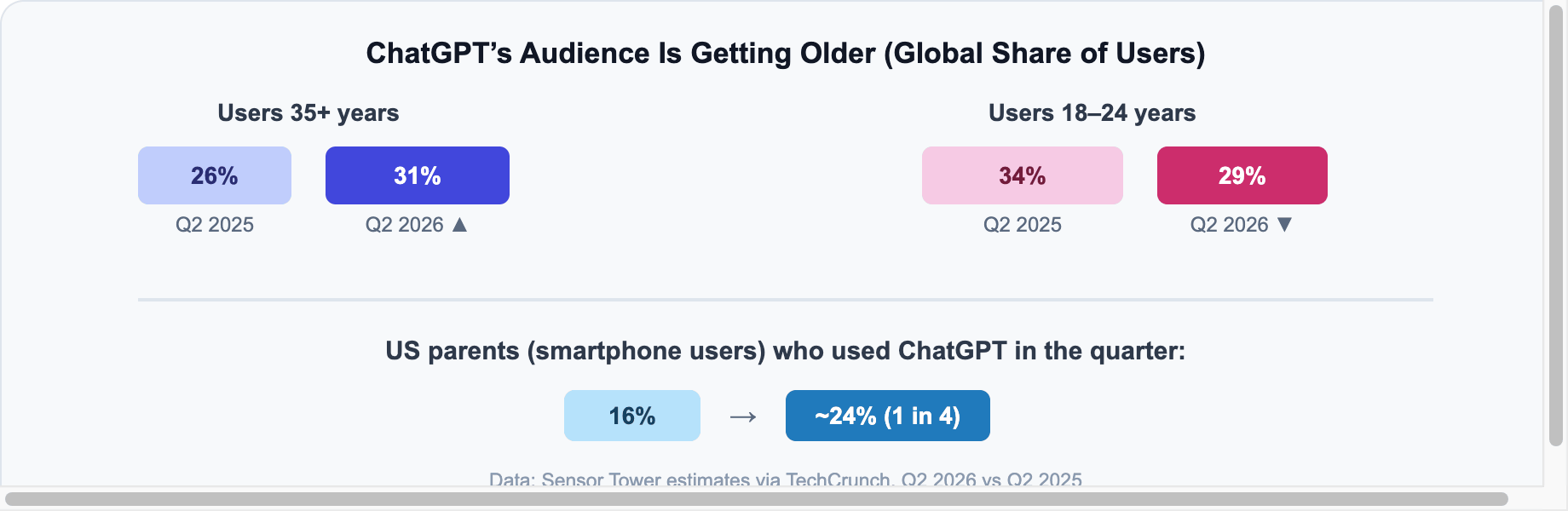
Per Sensor Tower estimates, ChatGPT’s global user base aged 35+ grew from 26% to 31% in a year, while the 18–24 share fell from 34% to 29%. In the US, nearly one in four parents with smartphones used ChatGPT last quarter, up from 16% a year earlier. The “young early adopter” era is over — ChatGPT is now mainstream family software.
Why Families, Why Now
- Growth math: individual power users are saturated; households are the next multiplier. Family plans also lock in subscriptions the way Netflix and Spotify family tiers did.
- Kids are already there: new research from the Family Online Safety Institute (4,000+ families surveyed in the US and Australia) found 38% of children used generative AI in the past week — while only 27% of parents thought they had. Parents are underestimating usage by a wide margin.
- Hardware is coming: with OpenAI’s rumored consumer device in development, a family-trust brand becomes strategically essential before it lands in living rooms.
The Safety Question
This push comes under real legal pressure. OpenAI faces multiple lawsuits from parents alleging ChatGPT contributed to harm suffered by their children. FOSI chief executive Stephen Balkam calls the new direction “safety by redesign” — retrofitting a product that was never originally built with kids in mind.
⚠️ What Experts Say Family AI Needs
- Stronger content controls and age-appropriate experiences
- Real parental oversight tools (not buried settings)
- Clear, repeated reminders that the user is talking to an AI, not a human
What It Means for the AI Market
Expect the whole industry to follow. Google is already positioning Gemini inside Android family accounts, and Meta ships AI across WhatsApp and Instagram where teens already live. The battleground is shifting from “best model” to “most trusted household assistant” — and trust, not benchmarks, will decide who wins the family market.
For builders, this also hints at a coming wave of family-focused AI product categories: homework helpers with guardrails, caregiver assistants for aging parents, and shared family memory/planning tools.
Sources & further reading: TechCrunch · FOSI research · OpenAI careers.





Leave a reply
Your email address will not be published. Required fields are marked *